
Car Dent & Ding
Repair Without Painting
OUR SERVICES
Door dings, car park knocks and everyday minor dents can usually be worked back into shape without paint, sanding or filler. We come to you anywhere in Sydney and quote a fixed price from photos before we start.
Mobile - we come to you | Paint-free repairs | Fixed price from photos
Where These Dents Come From
Most of the dents we repair around Sydney come from a short list of everyday events: a car door opened too enthusiastically in a shopping centre car park, a stray trolley, a low branch in a driveway, a bollard found while reversing, or a neighbour's bin blown over in a southerly. Dense street parking through the inner suburbs and tight underground car parks in apartment blocks account for a large share of them.
None of these need a respray. Where the paint is unbroken — which is usually the case with a low-speed knock — paintless dent removal brings the panel back to its original shape and the car keeps its factory finish.

What Happens During a Repair
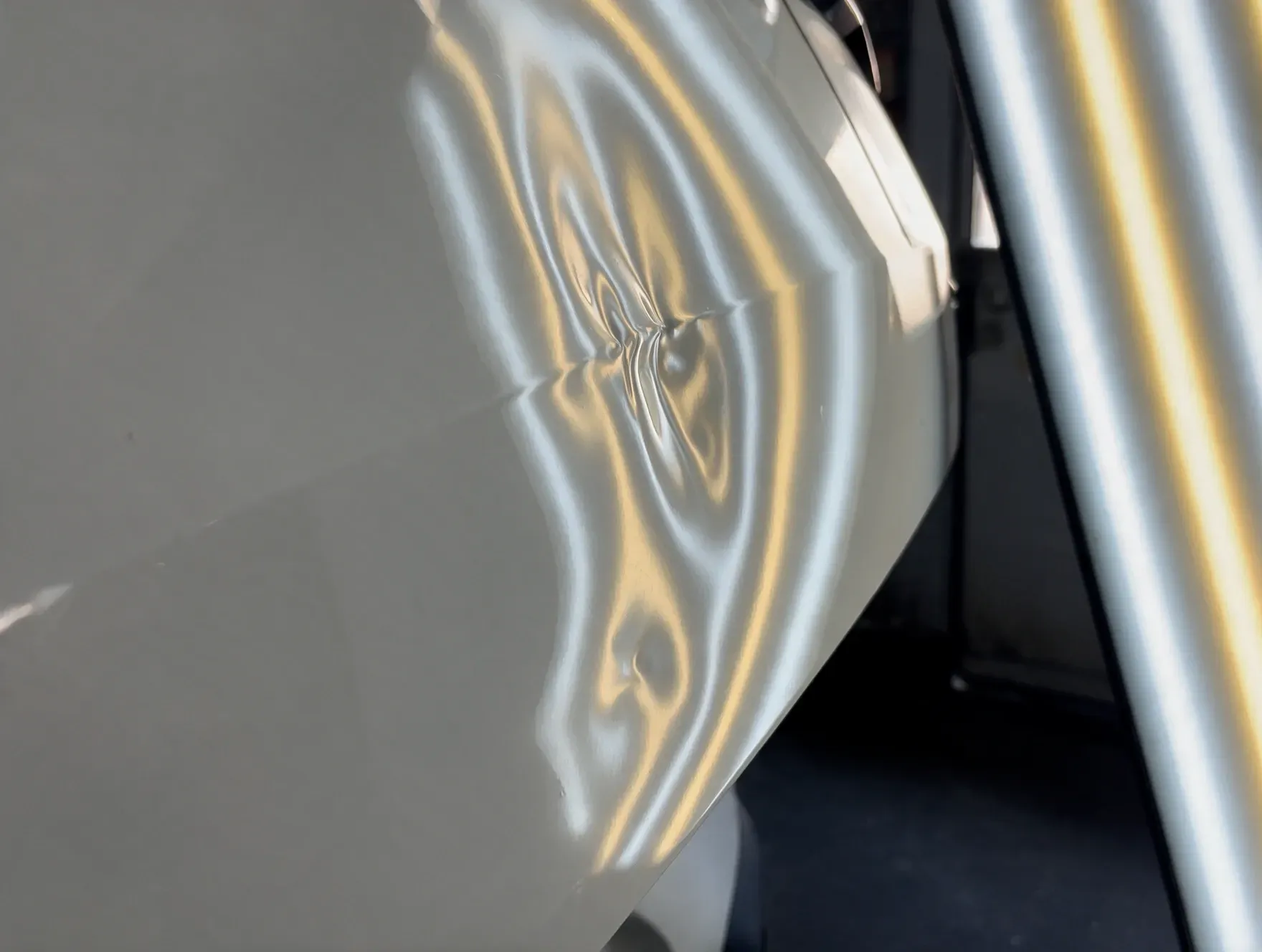
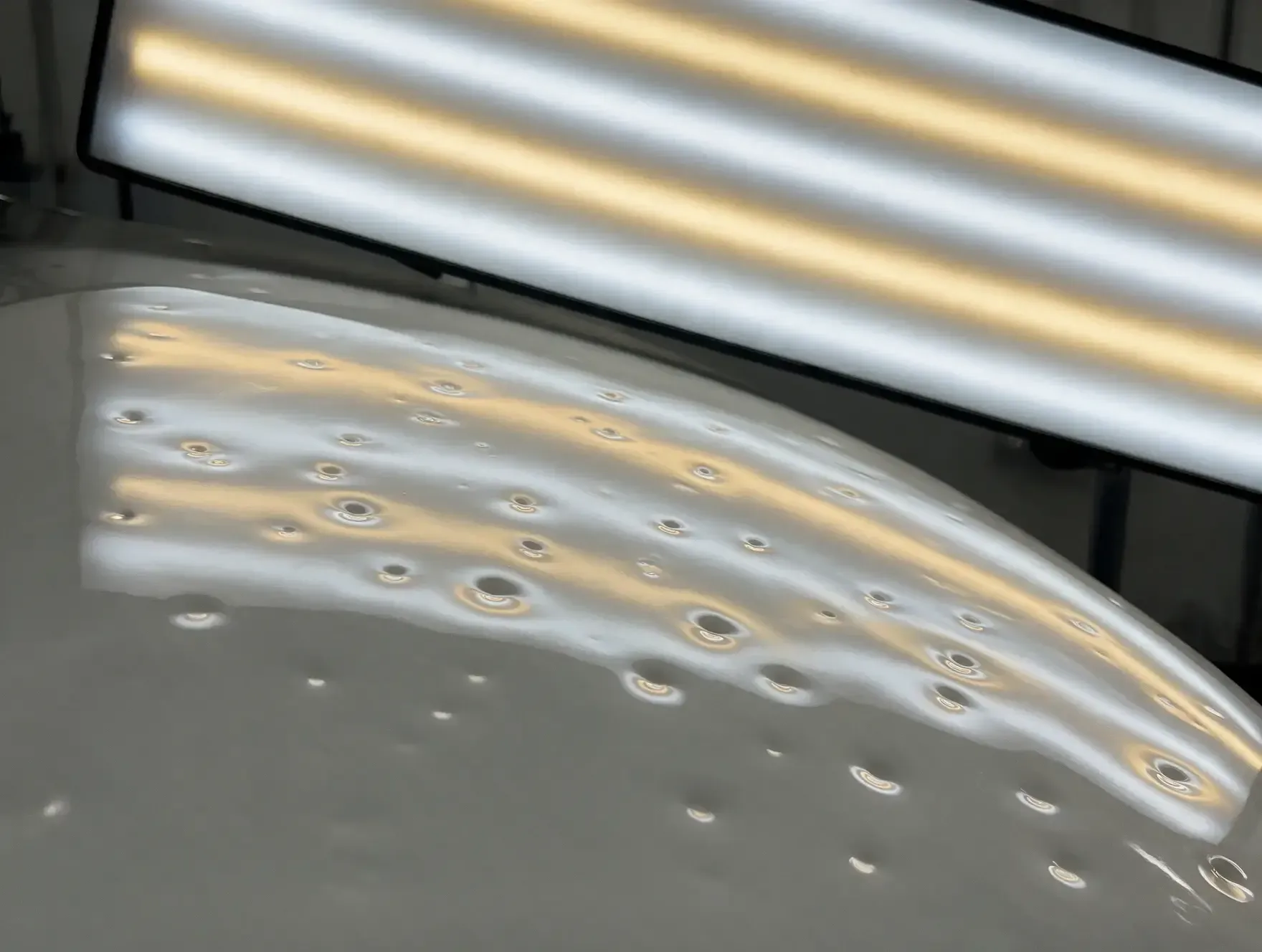
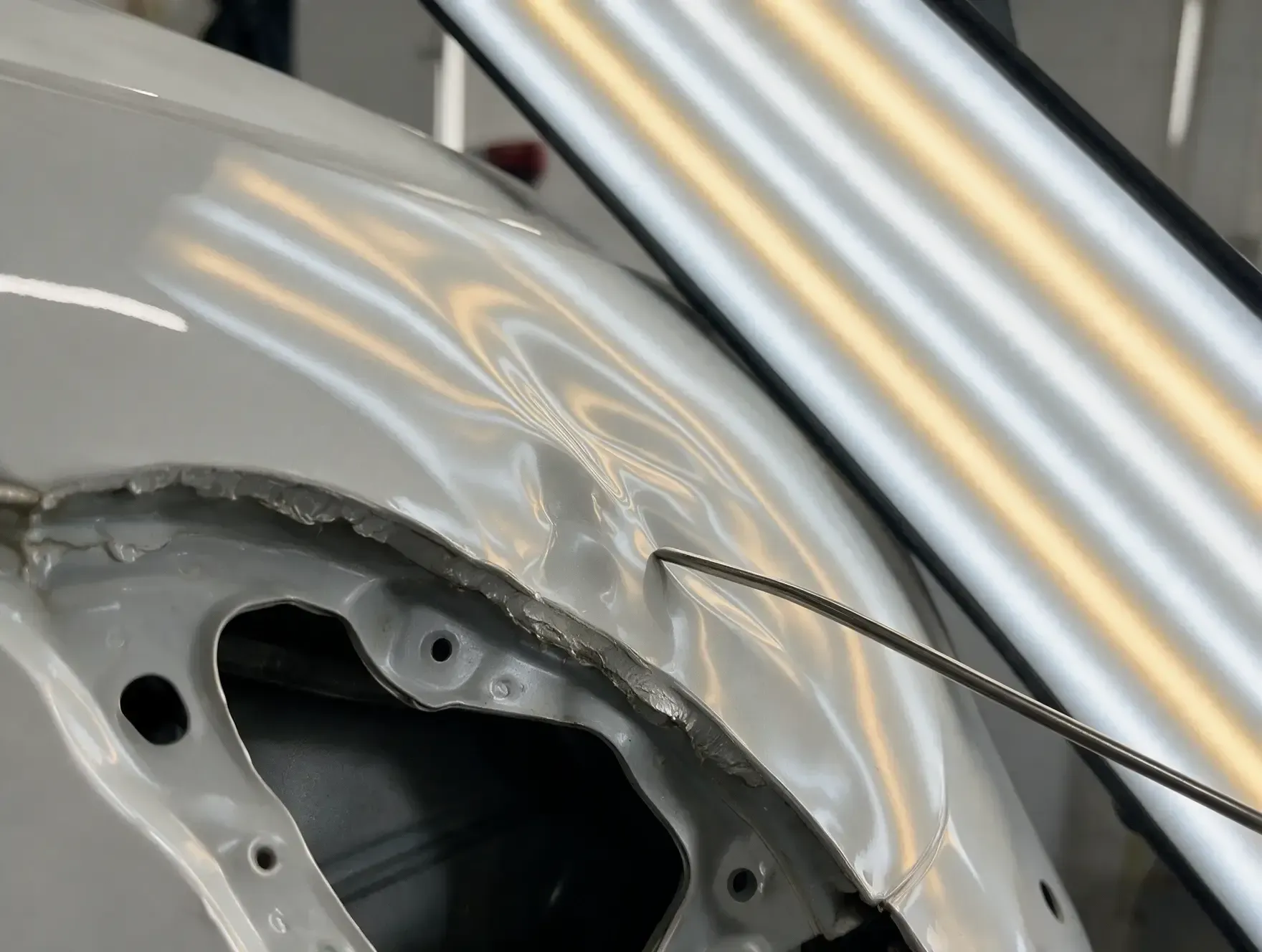
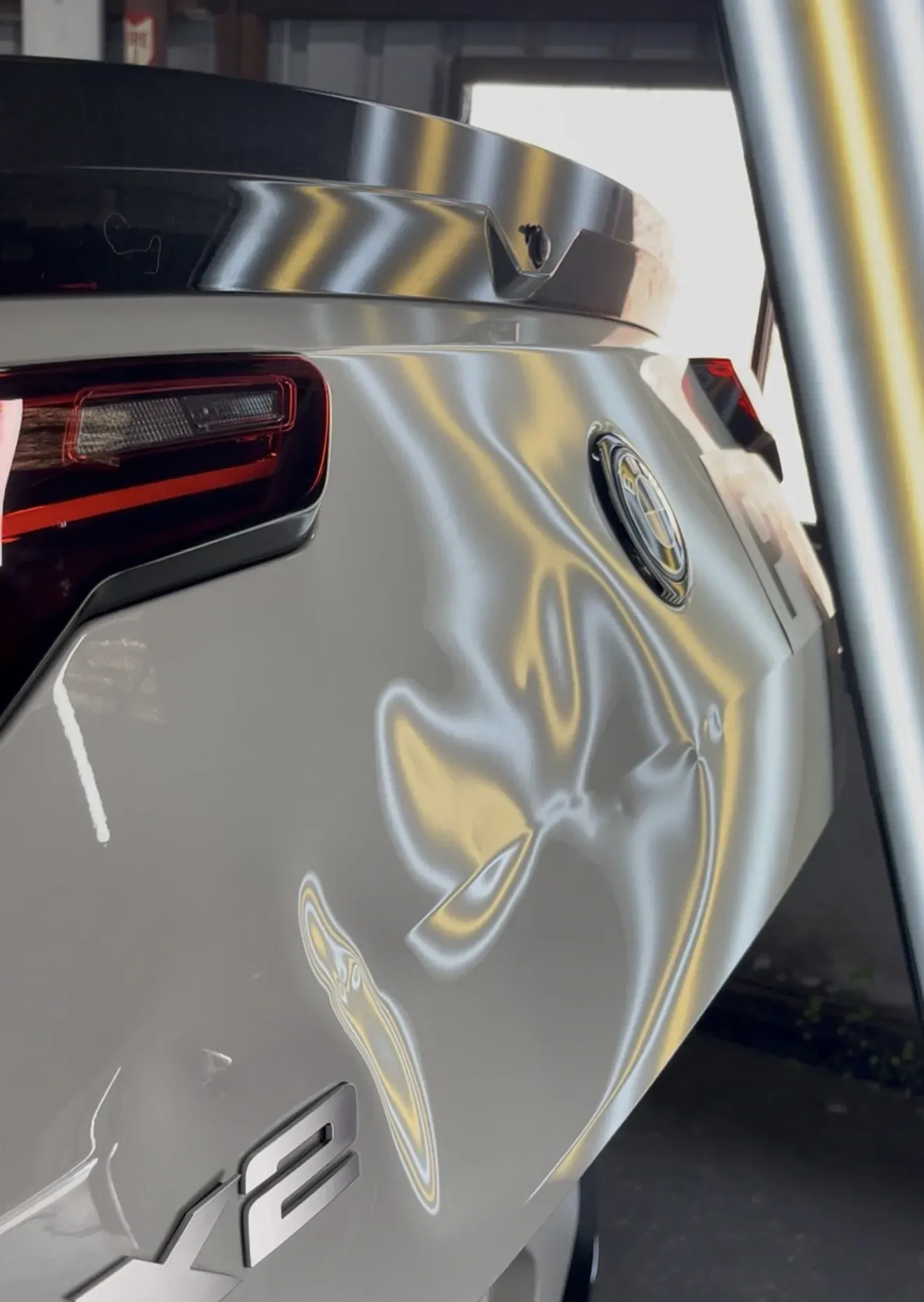
The first step is access. Depending on where the dent sits, we reach the back of the panel through the door cavity, the boot, a wheel arch, or the engine bay, sometimes removing a trim panel or liner to get there. Specialised rods then apply controlled pressure from behind, working the metal back in small increments while the surface is read under a reflective light board.
Where the back of the panel can't be reached — some quarter panels, roof rails and bonded sections — we use glue-pull repair. A tab is bonded to the outside of the dent with a purpose-made adhesive, a pulling tool draws the metal out, and the glue is released cleanly afterwards. Both methods move metal, not paint.
Finishing is the part that takes patience: a dent is not done when it disappears at a glance, but when the reflection running across the panel is straight from every angle.
Three things drive the cost of a dent repair:
- Size and depth. A shallow 20-cent-piece ding is quick. A palm-sized dent with a sharp crease in the middle takes far longer.
- Access. A door skin is straightforward. A dent behind a brace, near a bonded seam or on a double-skinned section takes more work to reach.
- Quantity. Several dents in one visit are cheaper per dent than separate call-outs, because the travel and setup happen once.
Position matters too: dents on a flat panel centre are more forgiving than dents sitting on a body line, where the metal has been shaped and stretched by the press.
What Affects the Price
Trading since 2010s
Sydney-wide coverage
No paint, no filler
No obligation to books
A single door ding is usually a 30 to 60 minute job. Two or three dents across different panels generally fill a morning. Larger or creased dents take longer and occasionally need a second visit if the metal has to relax between stages — we'll flag that in the quote rather than discover it on the day.
How Long It Takes
If the paint has cracked or chipped at the dent, or the metal is torn, this isn't a paintless job — it needs traditional panel and paint work. Deep creases that run into a panel edge often fall into the same category. We assess that from your photos before you book, so you're never paying a call-out to be told no.
Dealing with hail instead? See hail damage repair. If it's a shallow mark from a trolley or a car park scrape, shopping trolley & car park dent repair covers that.
What This Service Doesn't Cover
Two to four photos are enough: one close-up, one from about two metres back, and one taken at a shallow angle so the light runs across the dent and shows its true shape. Add your suburb and the make and model, and we'll come back with a fixed price and a realistic time estimate.
Getting a Quote
Take the most common job we quote: a single door ding on a five-year-old hatchback, about the size of a twenty-cent piece, sitting in the flat middle of the rear passenger door with the paint unmarked.
On arrival the door trim card comes off — usually a handful of clips and one or two screws — so a rod can be worked in behind the skin. A reflector board or light bar goes up beside the panel, because a shallow dent is almost invisible in flat light and obvious the moment a straight line is reflected across it. The dent then comes out in small pushes, checking the reflected line after each one, until the distortion in the reflection disappears. The trim goes back on, the panel is wiped down, and you look at it in daylight before anyone calls it finished.
Start to finish, that job is usually under an hour on site. A deeper dent, a dent close to the door's folded edge, or a panel that has to be reached around bracing can easily take two or three times as long — which is why the quote comes from photos rather than a flat rate.
What a Typical Repair Looks Like
Where We Fix Dents & Dings
Other ways we can help.
Dent & Ding Repair
Door dings, shopping centre knocks and minor collision dents removed without a trace
Panel Dent Repair

Bigger dents across a whole bonnet, boot, door or panel, worked back into shape without cutting or repainting.
Hail Damage Repair

Mult-panel hail dents assessed and repaired, with or without an insurance claim.
Trolley & Car Park Dents

The small dents that build up in car parks and driveways - fixed quickly and affordably.
-
Can you fix a dent if I don't know what caused it?
Send photos and we'll tell you. Most damage falls clearly into one of the three, and if what you have needs traditional panel and paint instead, we'll say so rather than take the booking.
-
Will the repaired panel look different to the rest of the car?
Yes. A door ding on one panel and a few hail dents on the bonnet can be quoted and repaired in the same visit. Send photos of everything you'd like looked at so the quote covers the lot.
-
Do you repair dents on lease, rental or company cars?
Most passenger cars, SUVs, utes and vans. Some panels — thin aluminium and certain composites — behave differently under PDR tools, so tell us the make, model and year and we'll confirm before booking.
-
How small is too small to bother with?
If it catches your eye every time you walk up to the car, it's worth a quote. Small door dings are usually among the quickest and cheapest repairs we do, and they're the ones most likely to be noticed at trade-in.